Juni 2026 /
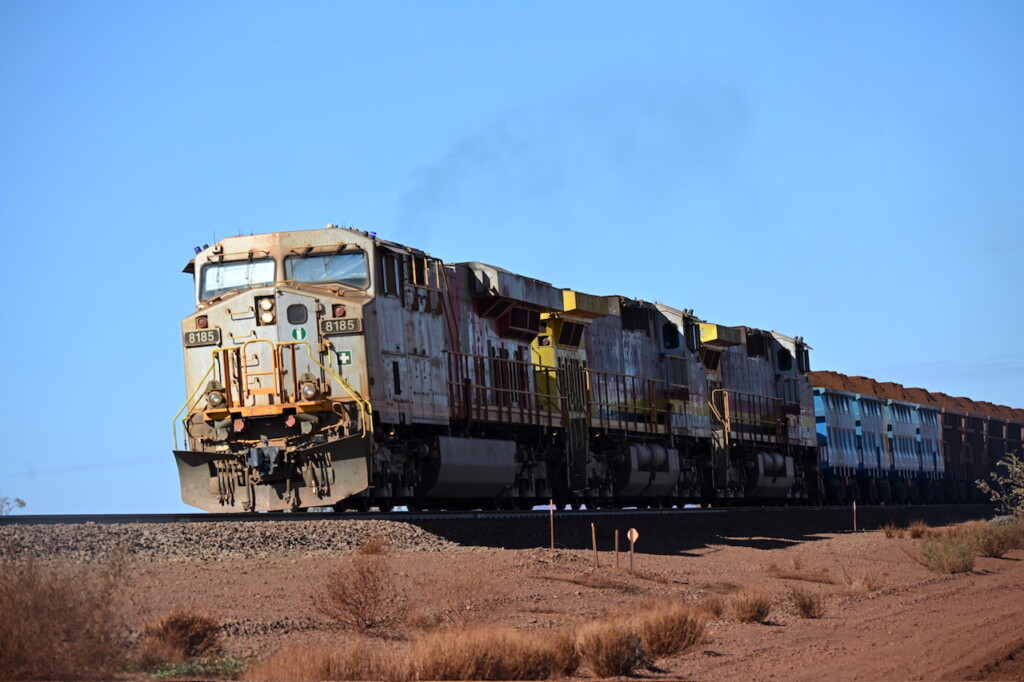
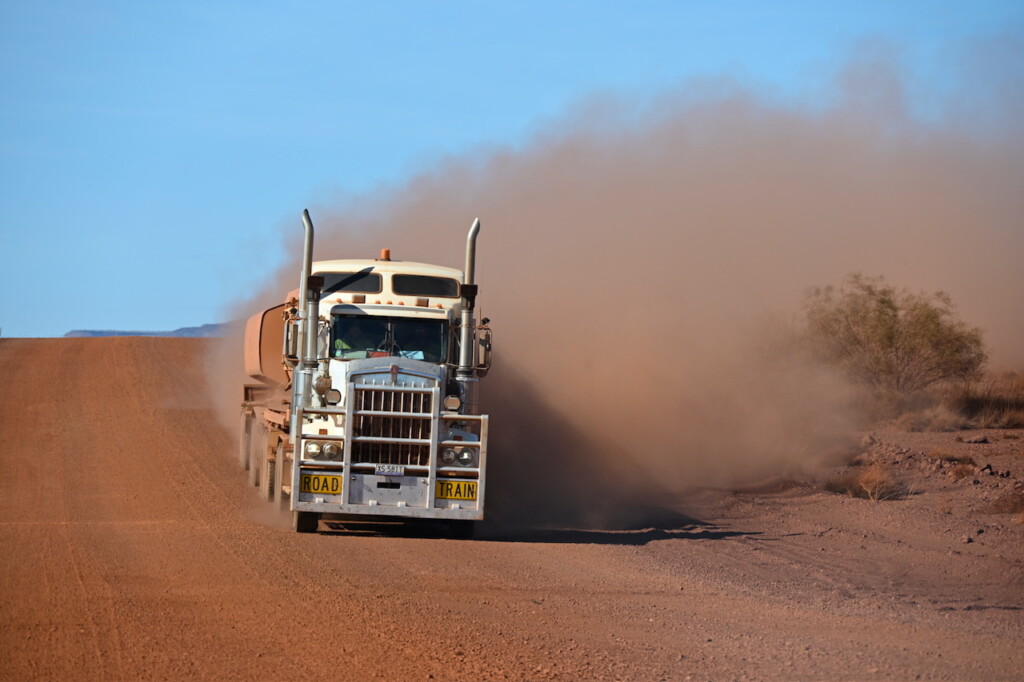
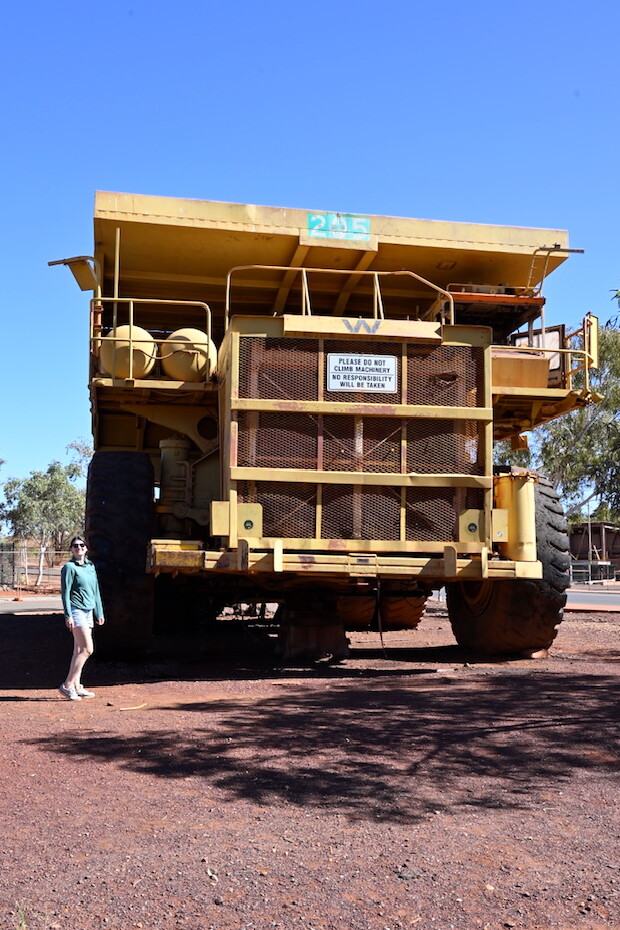
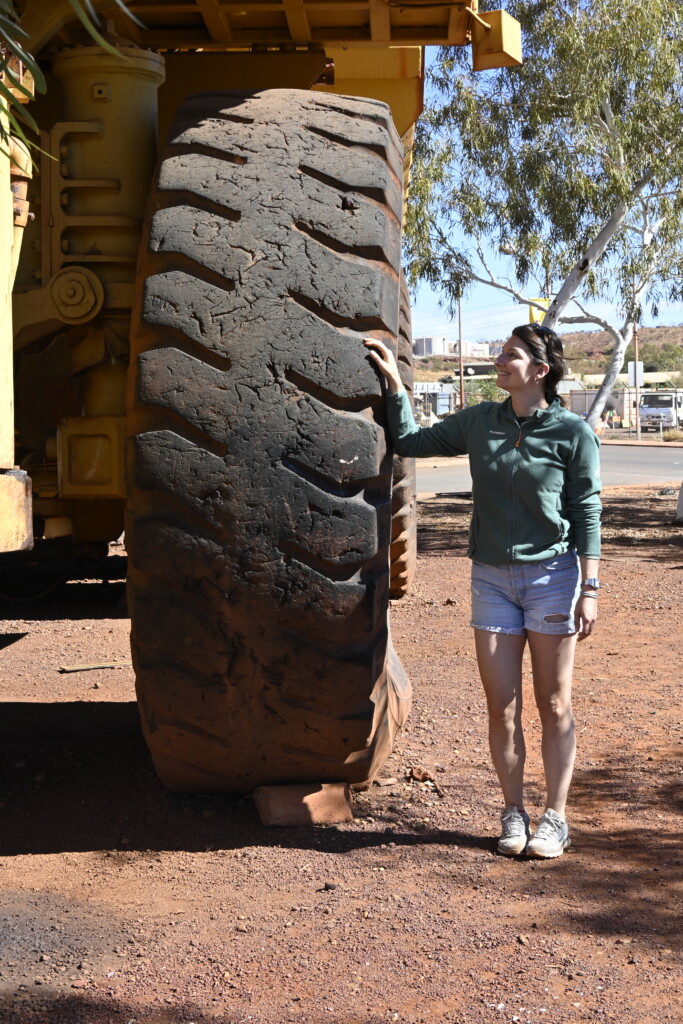
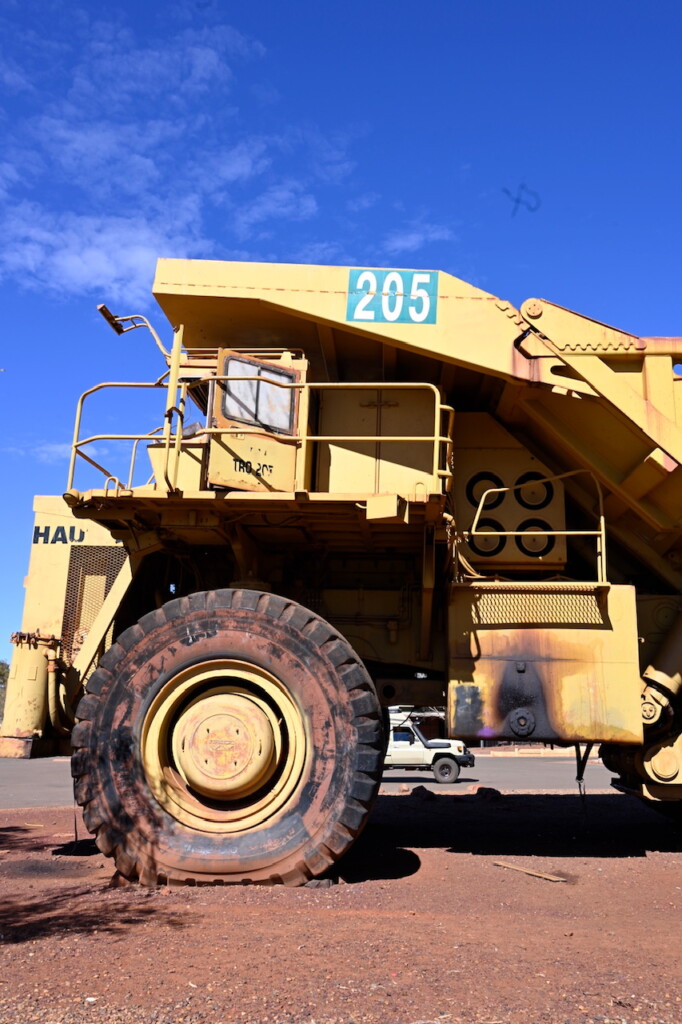
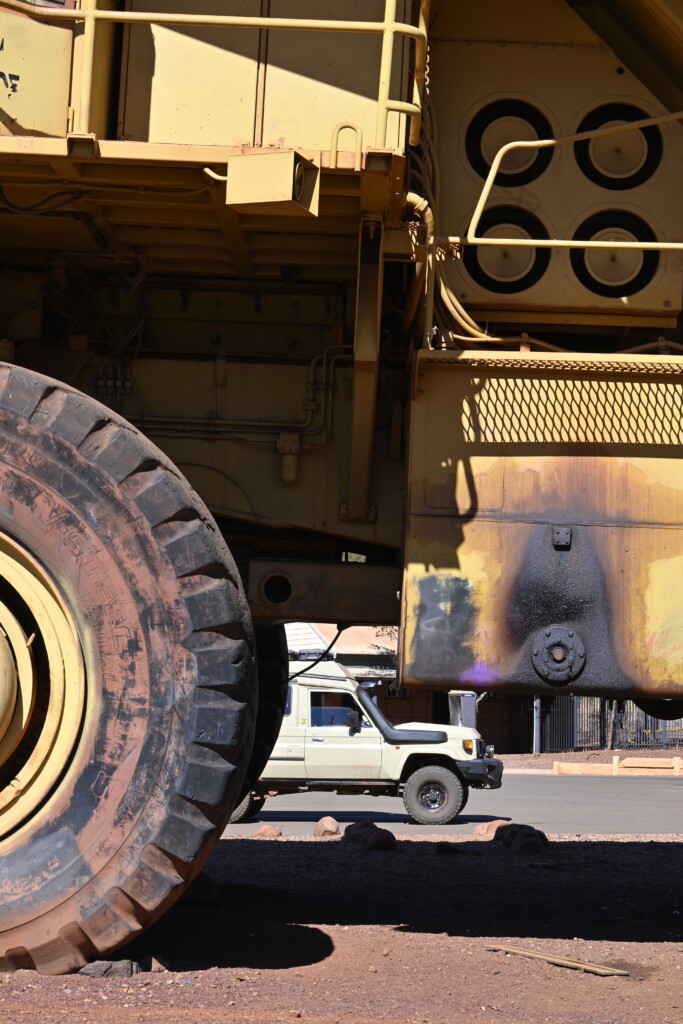
Weiter geht die Fahrt durch die raue Mienenwelt Australiens. Rau muss aber keinesfalls rückständig bedeuten: Wir erfahren, dass die Züge hier weitgehend autonom rollen und gegebenenfalls aus dem 1’000 km entfernten Perth remote gesteuert werden können. Auch sehr eindrücklich sind die wirklich riesengrossen Muldenkipper, die in den Mienen zum Einsatz kommen. In Tom Price kann ein ausgemustertes Exemplar sehr zur Freude von Carmen aus nächster Nähe begutachtet werden.
The journey continues through Australia’s rugged mining landscape. But ‘rugged’ certainly doesn’t have to mean ‘backward’: we learn that the trains here run largely autonomously and, if necessary, can be controlled remotely from Perth, 1,000 km away. The truly enormous dumper trucks used in the mines are also very impressive. In Tom Price, a decommissioned specimen can be examined up close, much to Carmen’s delight.
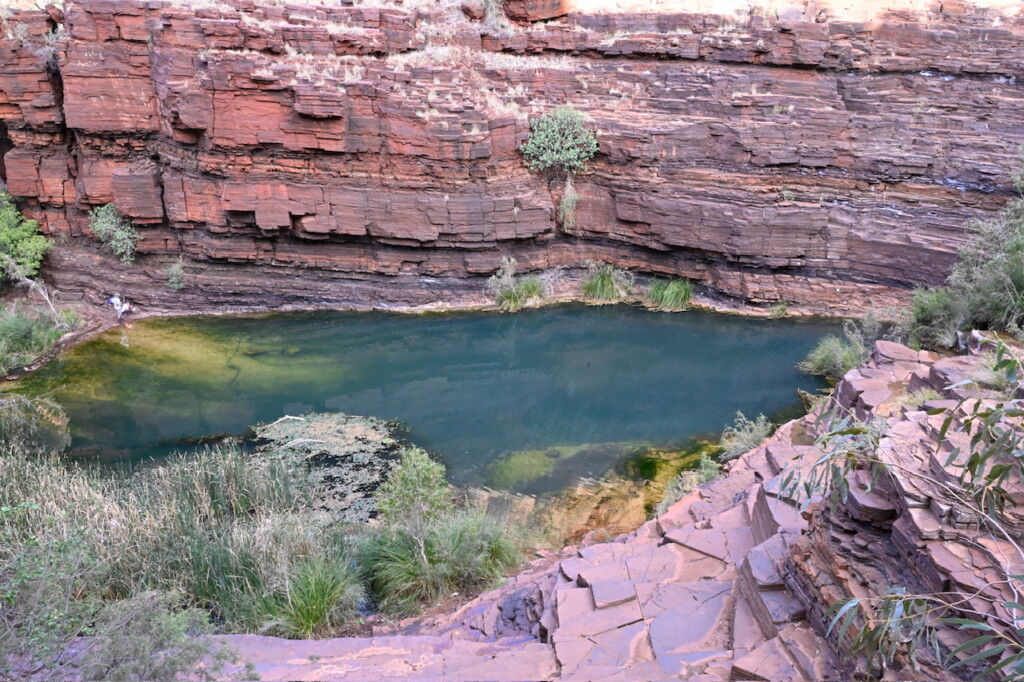
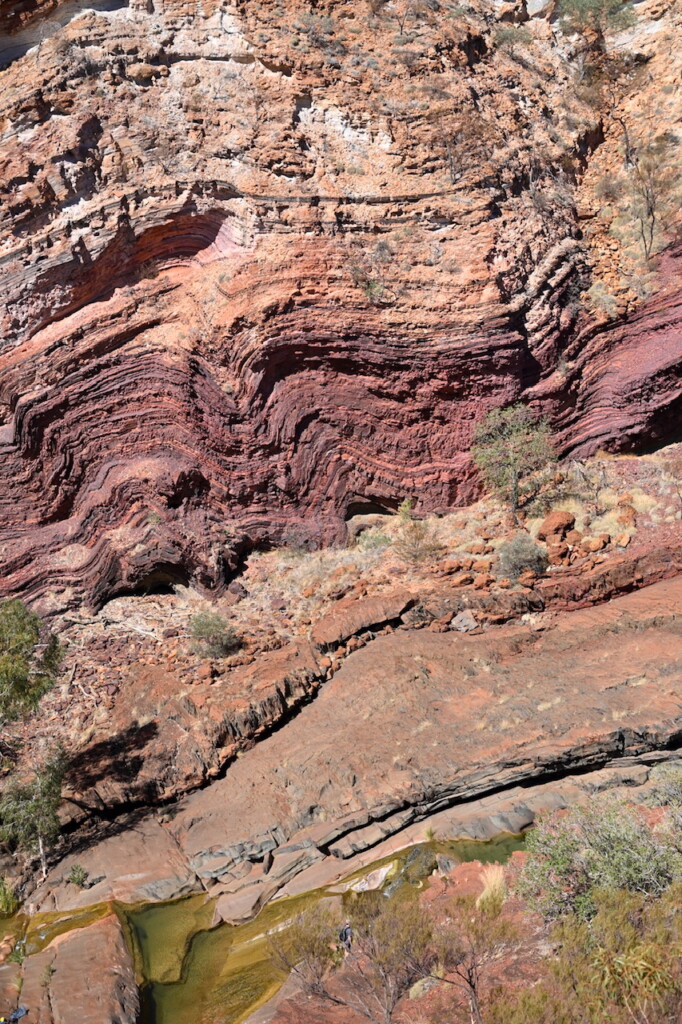
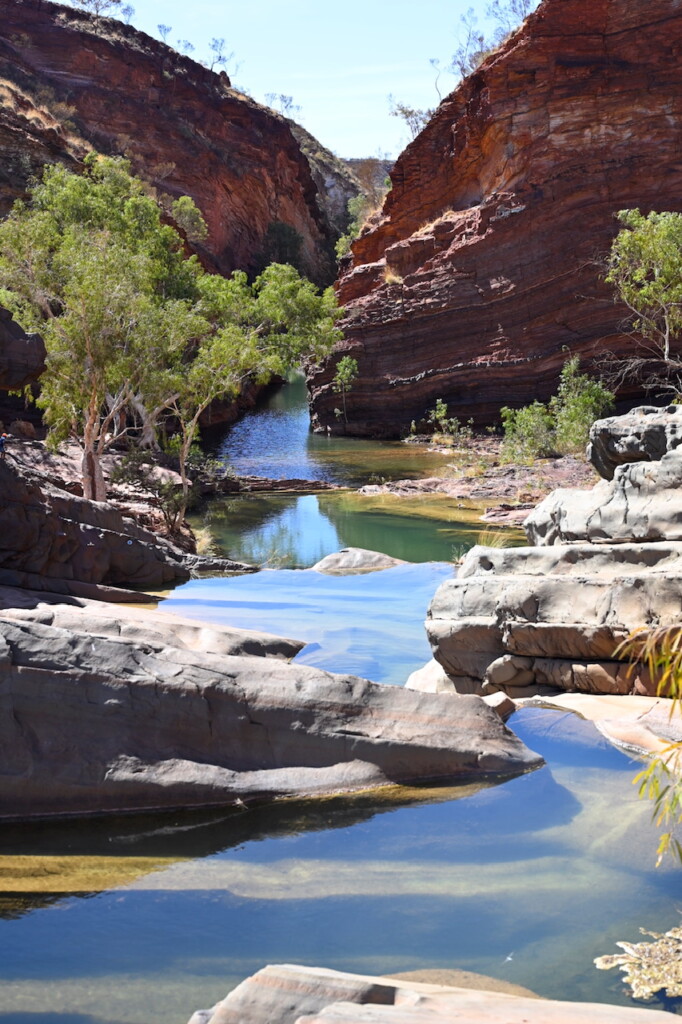
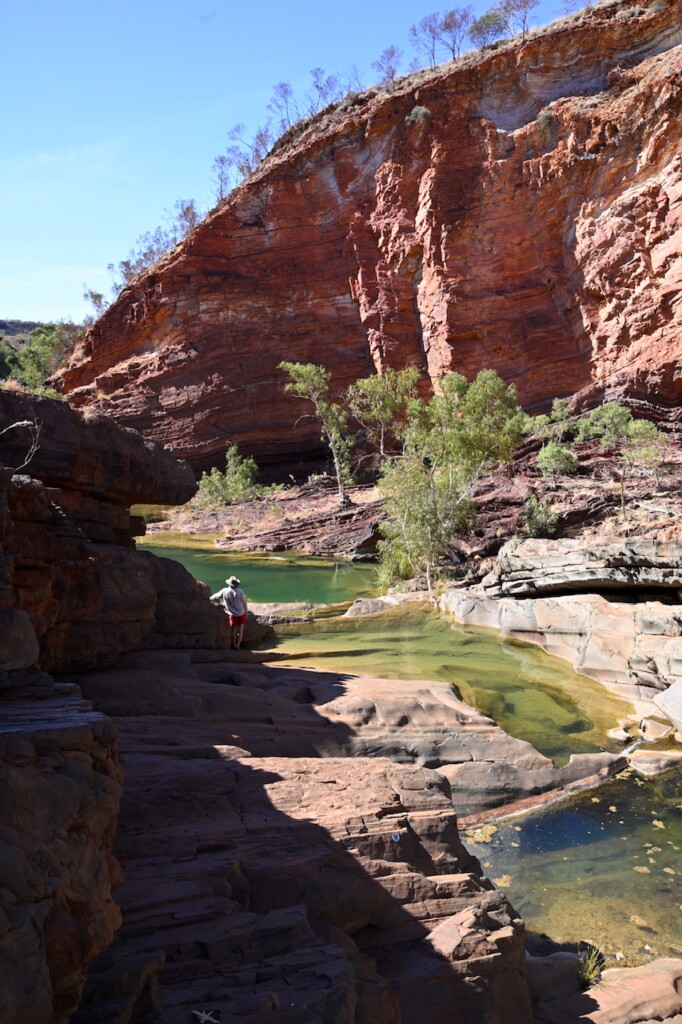
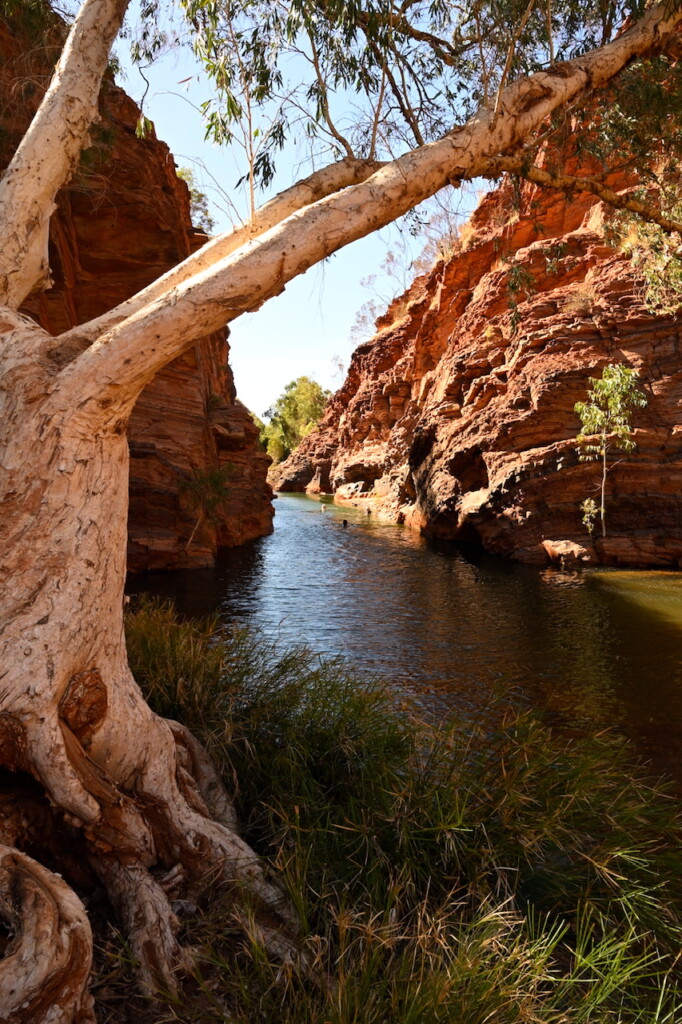
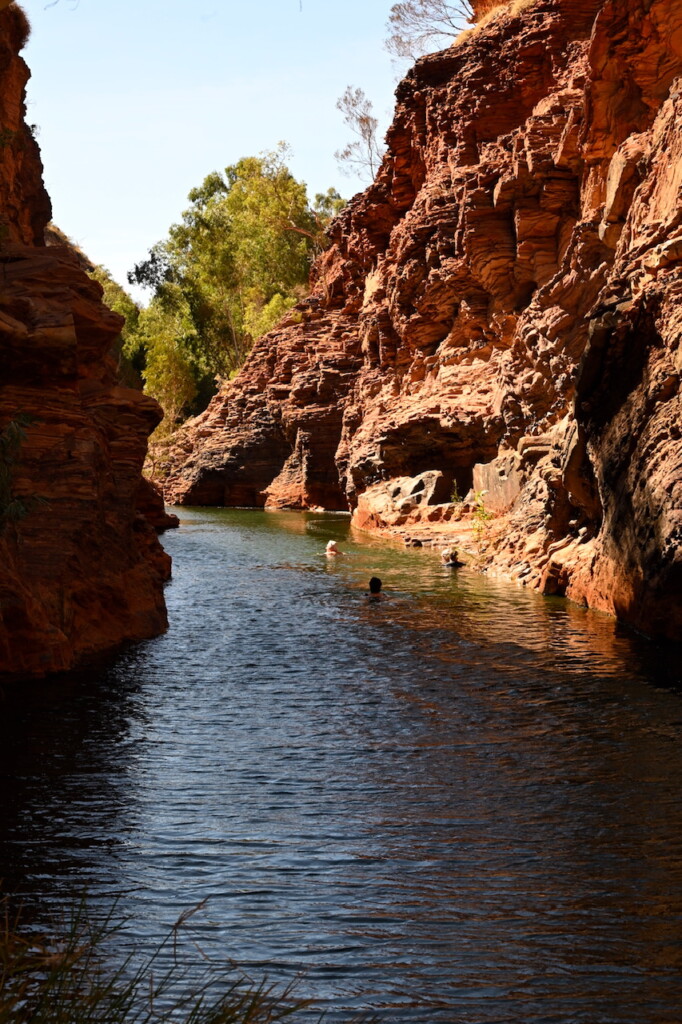
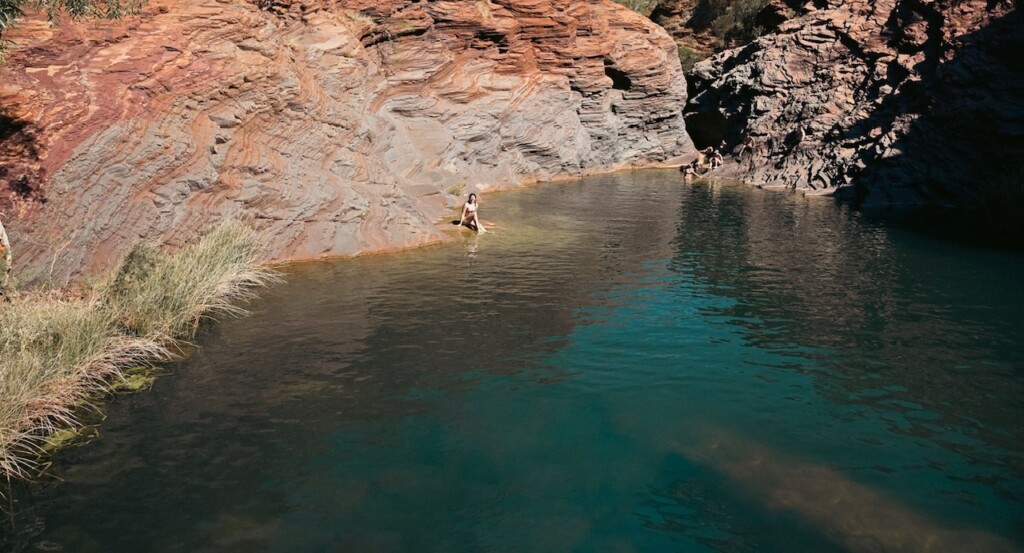
Um uns den Staub der Fahrt aus den Haaren zu waschen, machen wir einen Halt bei der Hamersley Schlucht des Karijini National Parks. Der Sprung ins kalte Nass ist wörtlich zu nehmen, denn das Wasser ist wirklich sehr kalt. Eigentlich sollte man hier für ein Social Media würdiges Foto noch in den hinteren «Spa Pool» klettern, der hält aber so gar nicht was der Name verspricht und ist nochmals um einige Grad kälter als das Becken davor, so lassen wir Warmduscher das mal lieber aus.
To wash the dust from our hair after the drive, we make our stop at Hamersley Gorge in Karijini National Park. The ‘plunge into the cold water’ is to be taken literally, as the water really is very cold. Ideally, for a photo worthy of social media, you’d climb into the ‘Spa Pool’ at the back, but it doesn’t live up to its name at all and is yet another few degrees colder than the pool in front of it, so we wimps decide to give that a miss.
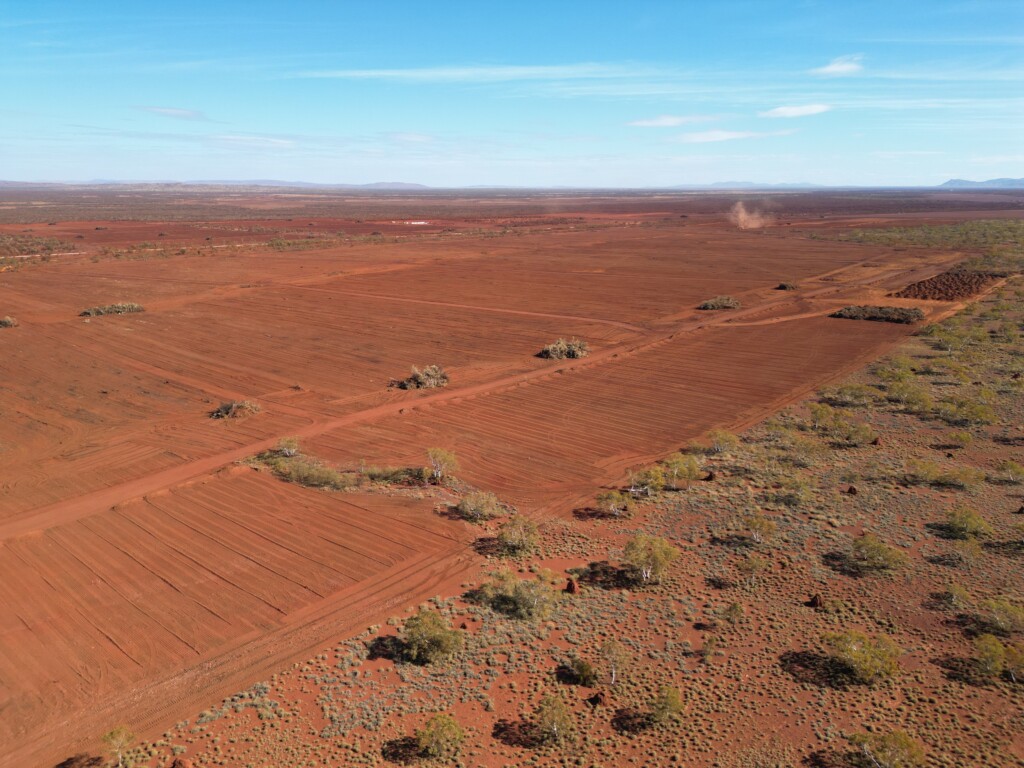
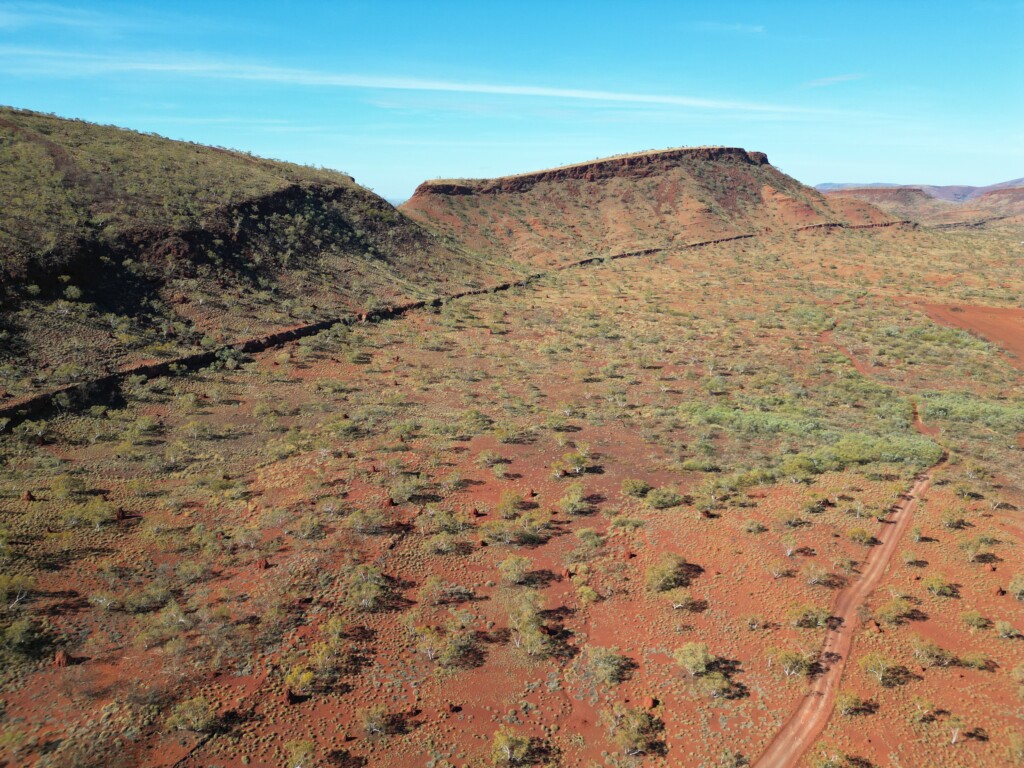
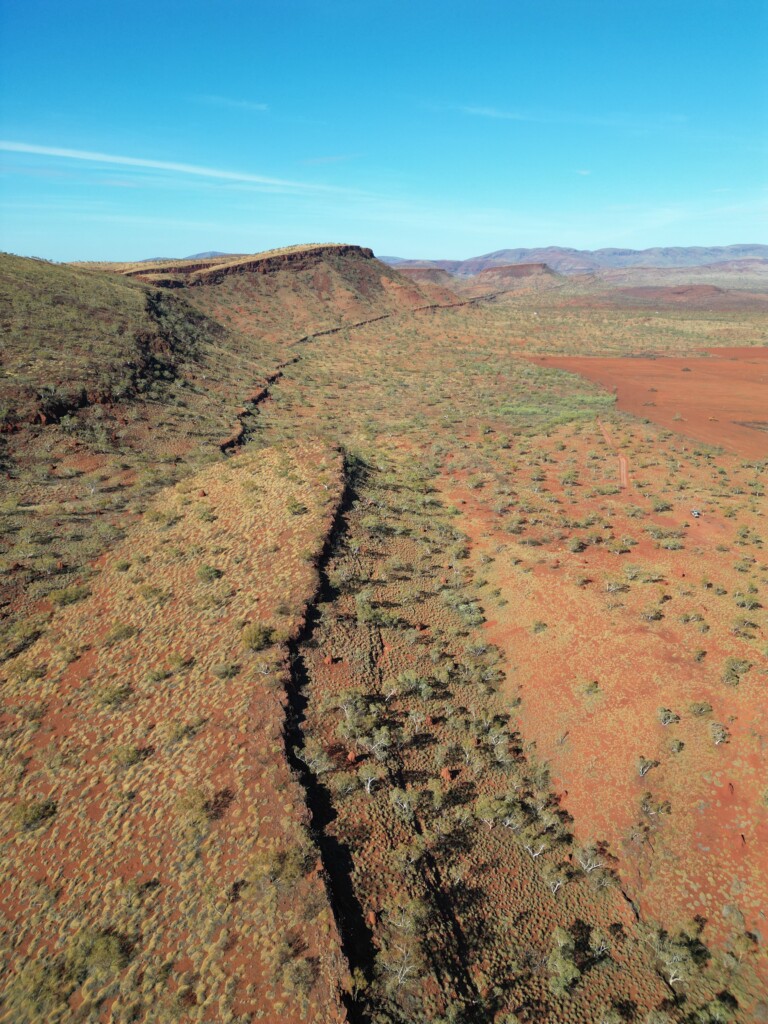
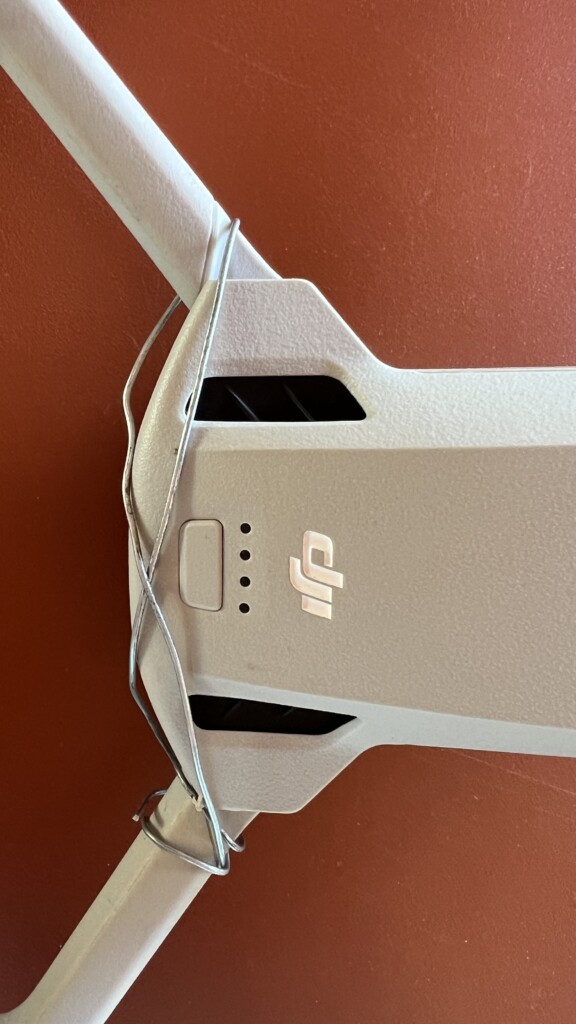
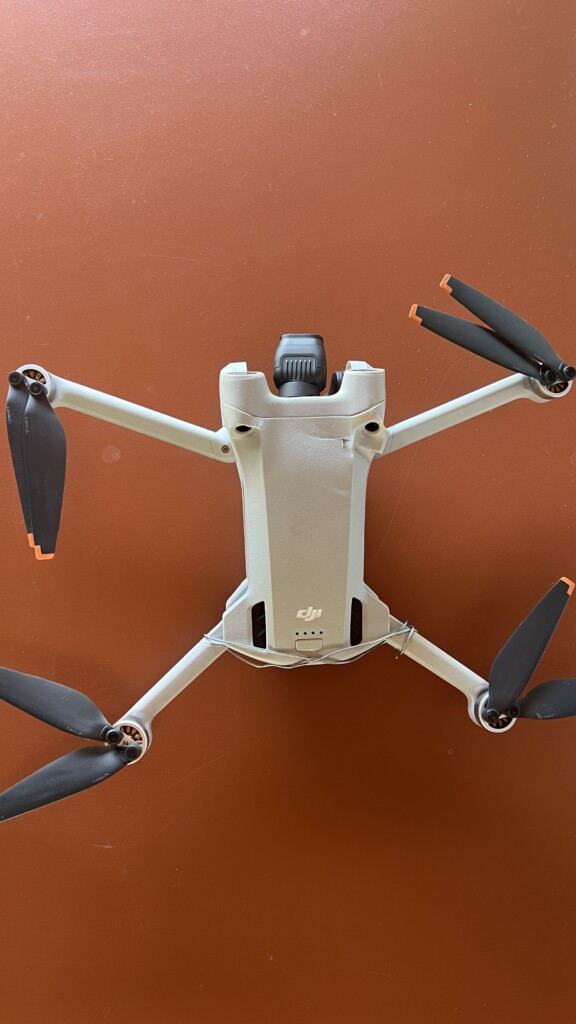
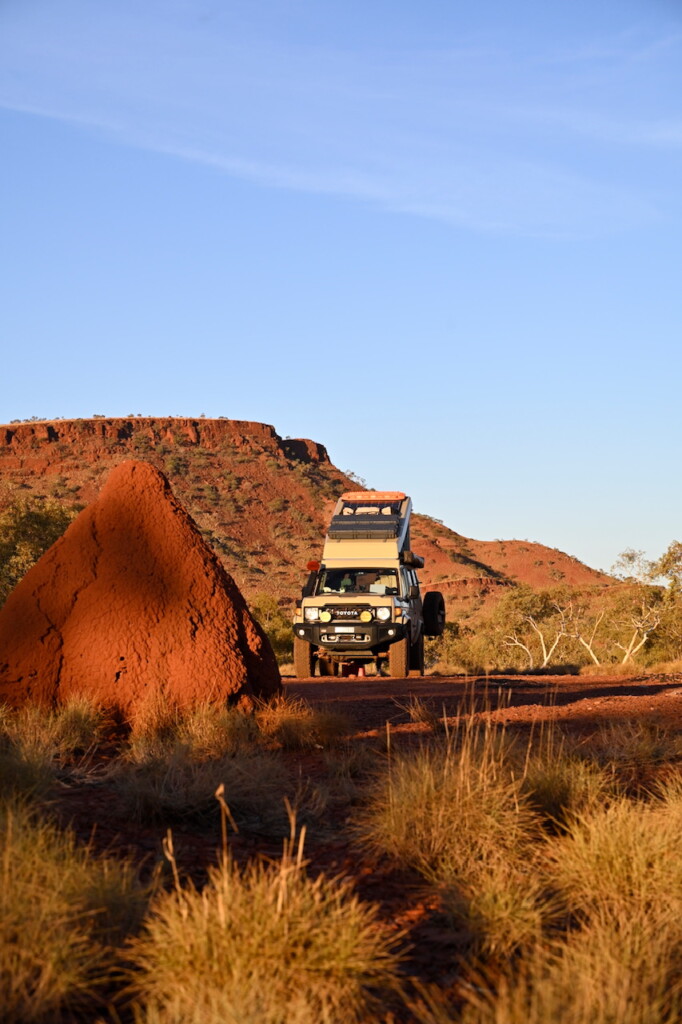
Ausserhalb vom National Park finden wir ein tolles freies Camp. Vor uns im Tal wird zwar gerade kilometerweit der Boden gerodet, die Baumaschinen verstummen aber pünktlich um 17 Uhr (auf die Minute) und hinter uns liegt eine Hügelkette, die so richtig zum Drohnenfliegen einlädt. Erst klappt das auch sehr gut, aber plötzlich schwankt das Bild, die Drohne wird hin und her gerissen, sie fällt unkontrolliert und dann ist der Bildschirm schwarz – der ganze Schreckmoment dauert nur wenige Sekunden. Der verhängnisvolle Flug endet abrupt als ein Adler hinter der Bergkette hervorschiesst und die Drohne zu fassen kriegt. Diese stützt dann gut 100 Meter in die Tiefe. Es folgen 1.5 Stunden Wanderung durch stacheliges Spinifex Grass den Hügel hinauf, um die geliebte Drohne zu retten. Dabei kreist der Keilschwanzadler unentwegt hoch über unseren Köpfen. Der Vogel hat sein Revier erfolgreich gegen den unerwünschten Flugkörper verteidigt – gratuliere. Nach der Rettung folgt die Schadensbilanz: Die obere Hülle wurde von einer Kralle wie bei einer Sardinendose zurück gerollt, ein Arm ist abgebrochen und der Stift zur Befestigung fehlt, die Abdeckung des Gimbals fehlt erst, kann aber im Geröll gefunden werden, alle Abstandssensoren an der Front sind beschädigt und auch alle Rotorblätter müssen komplett getauscht werden. Es erscheint erst hoffnungslos. Die Drohne ist aber nach zwei Stunden klassischer «Buschmechanik» unter Einsatz von Feile, Pinzetten, Nägeln und Draht tatsächlich wieder in einem flugfähigen Zustand. Puuh Glück gehabt, denn hier draussen würden wir vor unserem nächsten grossen Abenteuer sicher keine neue Drohne mehr kriegen.
Outside the National Park, we find a great place to camp for the night. Although the ground is currently being cleared for kilometres ahead of us in the valley, the construction machinery falls silent at 5 pm sharp (to the minute), and behind us lies a range of hills that’s just perfect for flying a drone. At first, everything goes very well, but suddenly the image wobbles, the drone is tossed about, it falls out of control and then the screen goes black – the whole terrifying moment lasts just a few seconds. The fateful flight ends abruptly when an eagle shoots out from behind the mountain range and snatches the drone. It then plummets a good 100 metres down into the depths. What follows is a 1.5-hour hike up the hill through prickly spinifex grass to rescue the beloved drone. All the while, the wedge-tailed eagle circles overhead. The bird has successfully defended its territory against the unwelcome flying object – well done. After the rescue, we assess the damage: the upper casing has been rolled back by a claw, just like a sardine tin; one leg has snapped off and the mounting pin is completely missing; the gimbal cover is missing at first but is later found in the rubble; all the front-mounted sensors are damaged; and all the rotor blades need to be replaced. At first, it seems hopeless. But after two hours of good old-fashioned ‘bush mechanics’ – using a file, tweezers, nails and wire – the drone is actually back in flying condition. Phew, that was lucky, because out here we certainly wouldn’t be able to get hold of a new drone before our next big adventure.
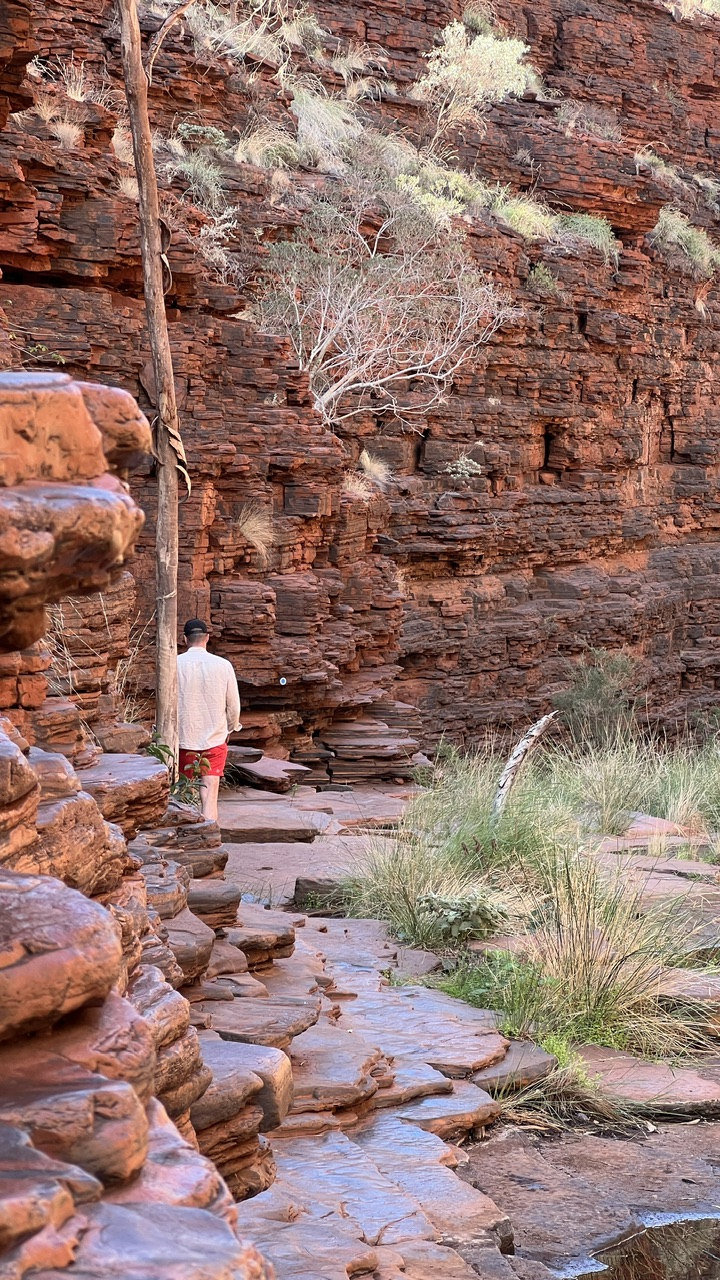
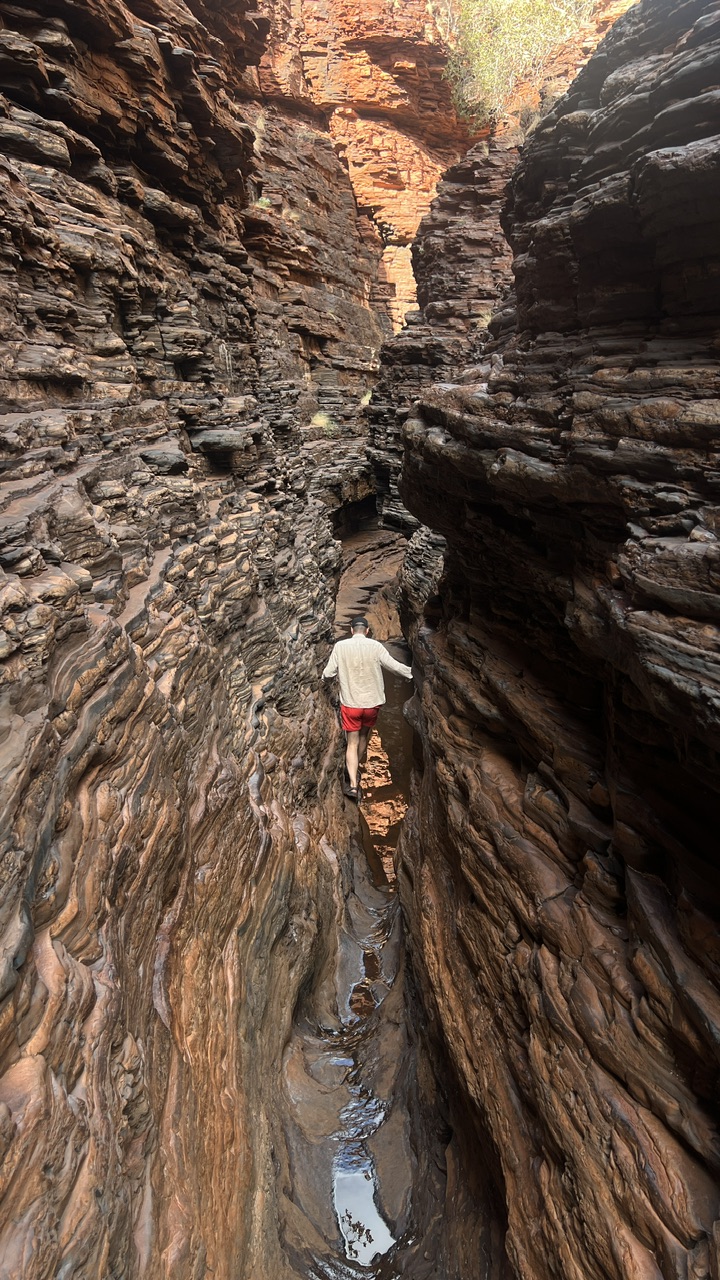
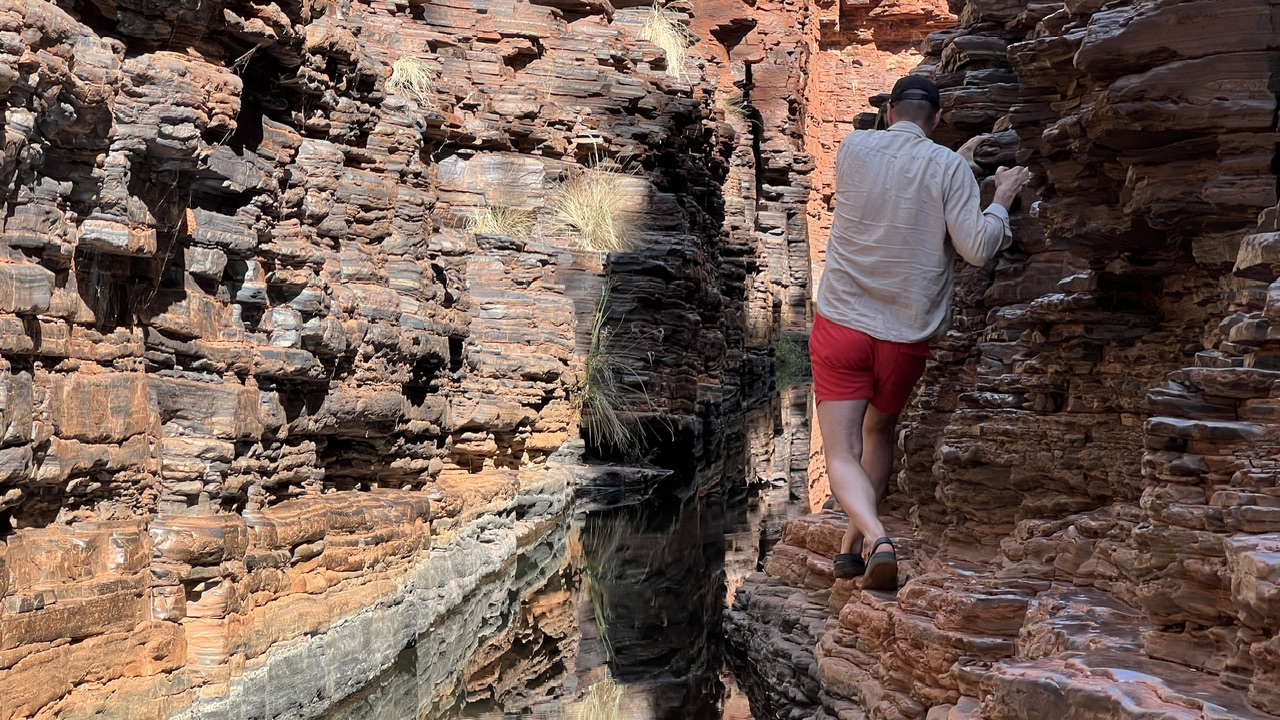
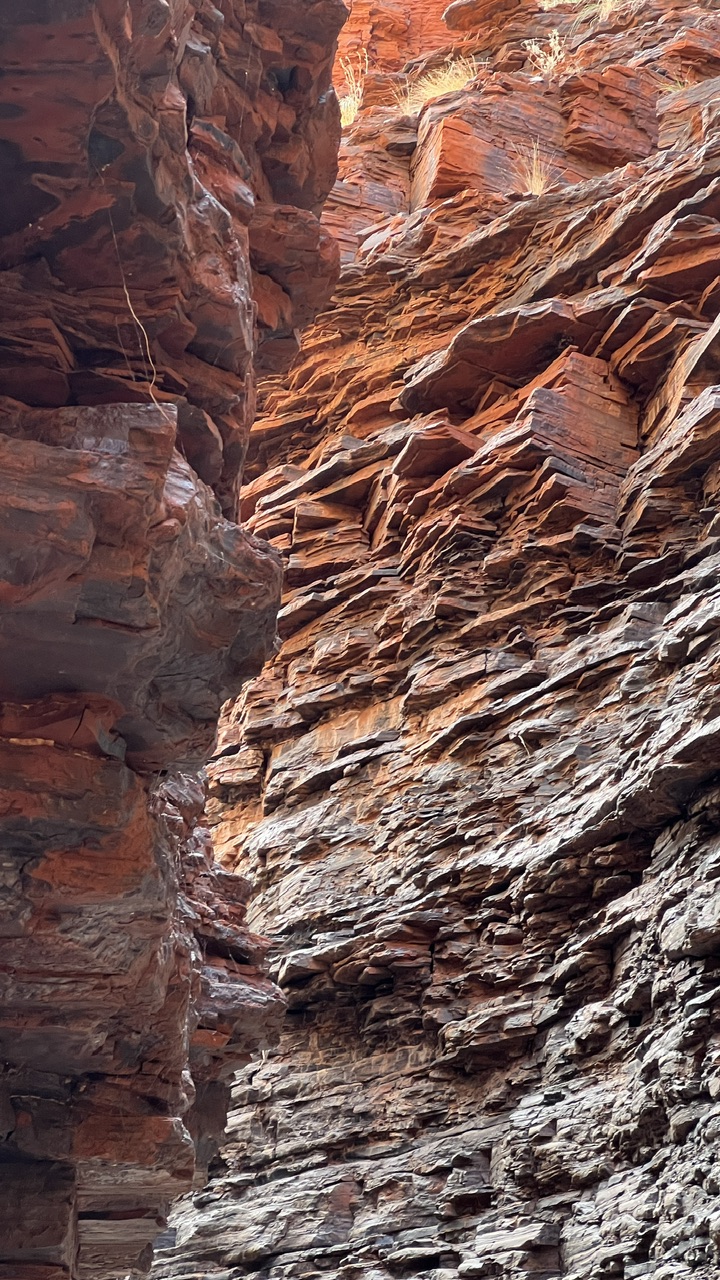
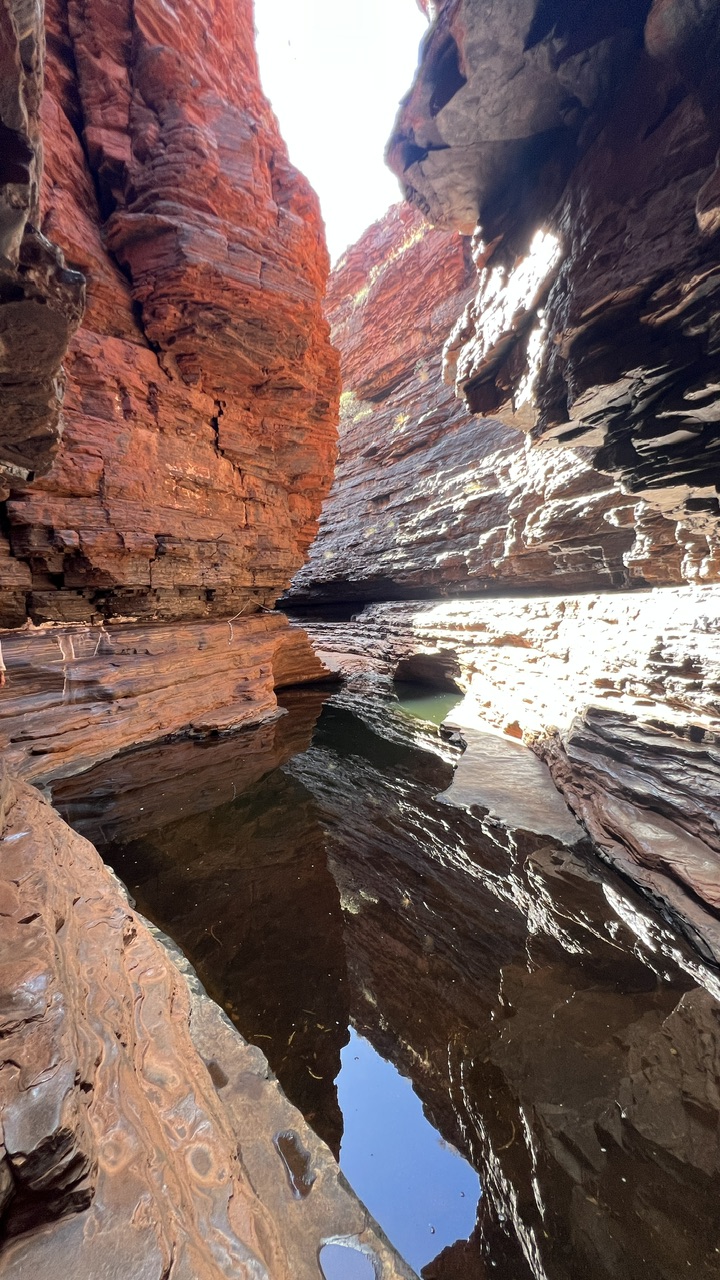
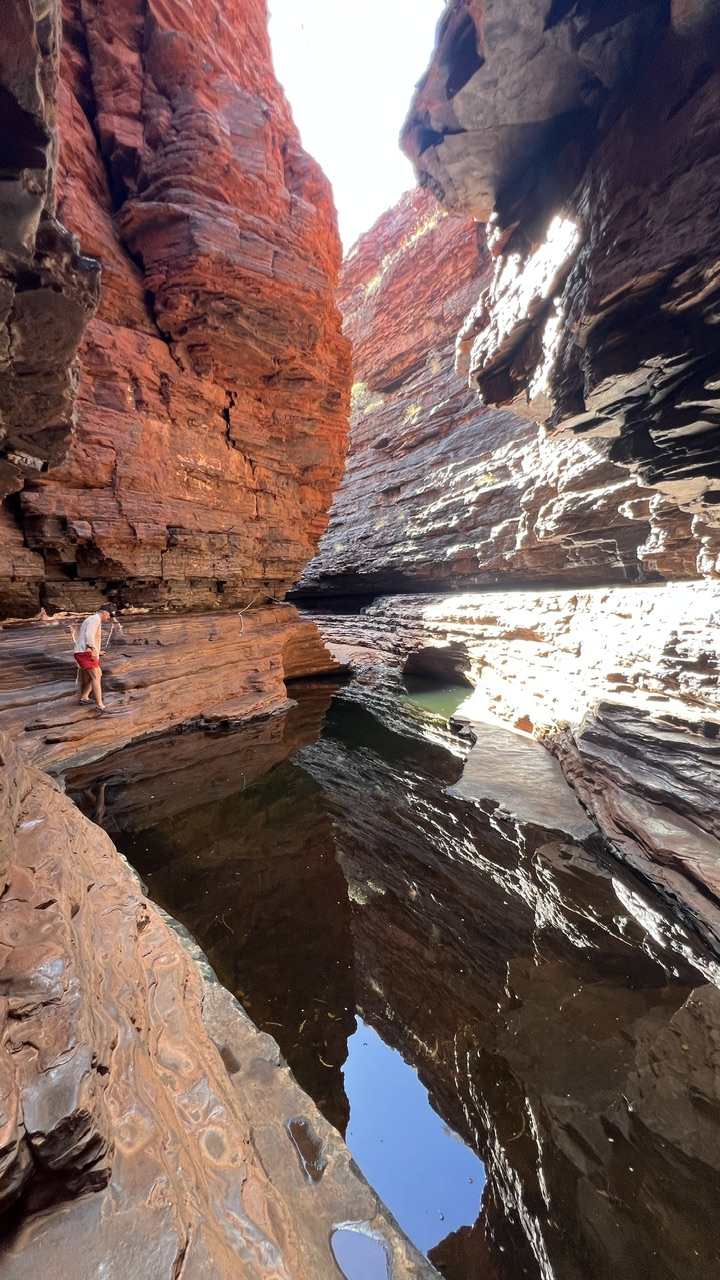
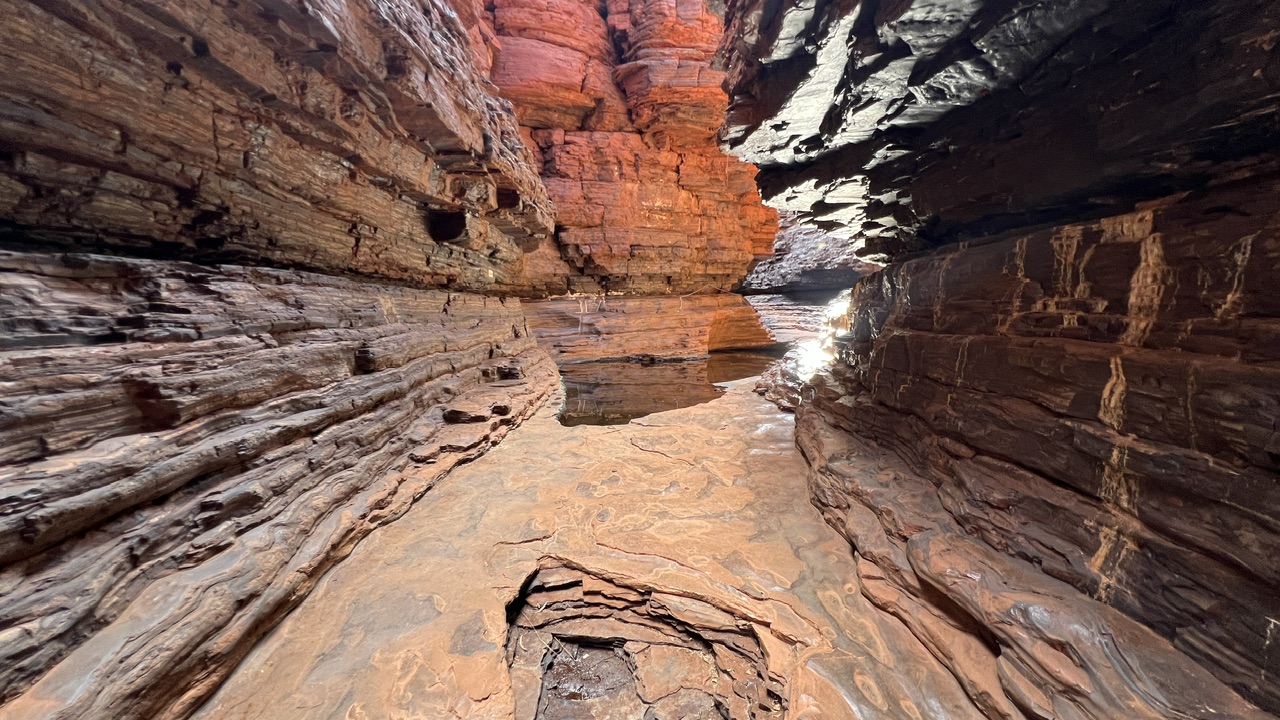
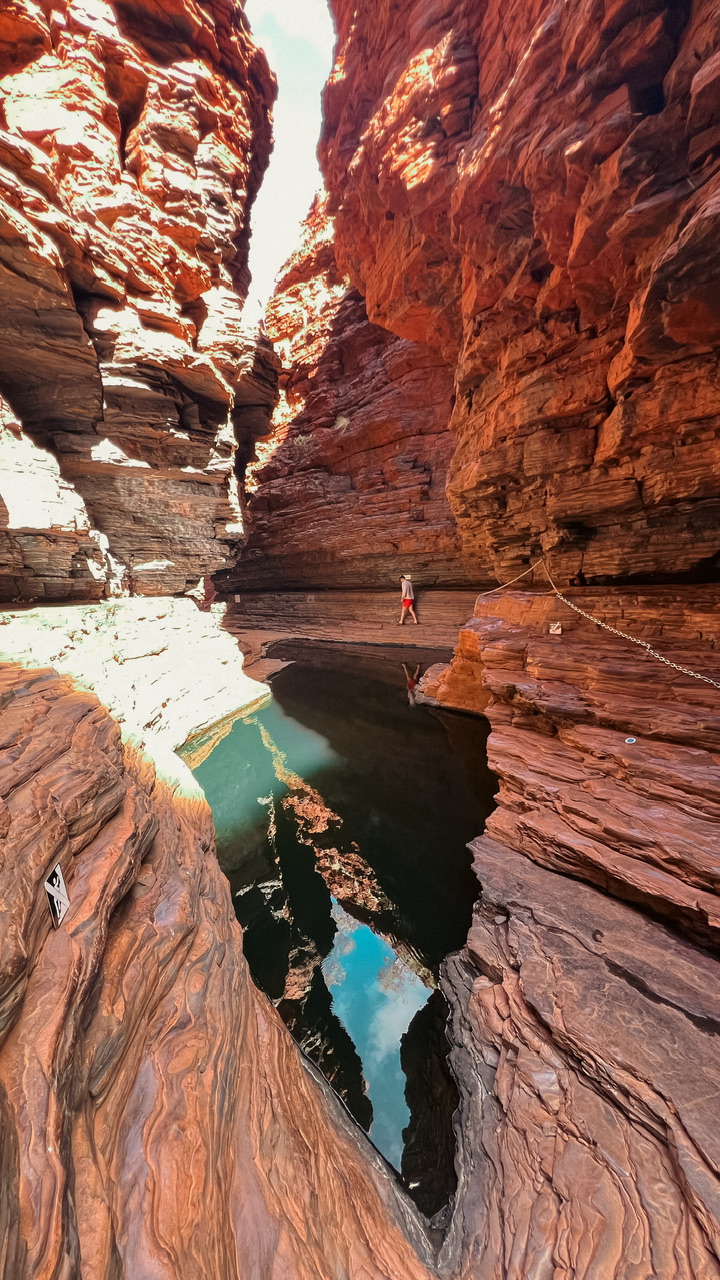
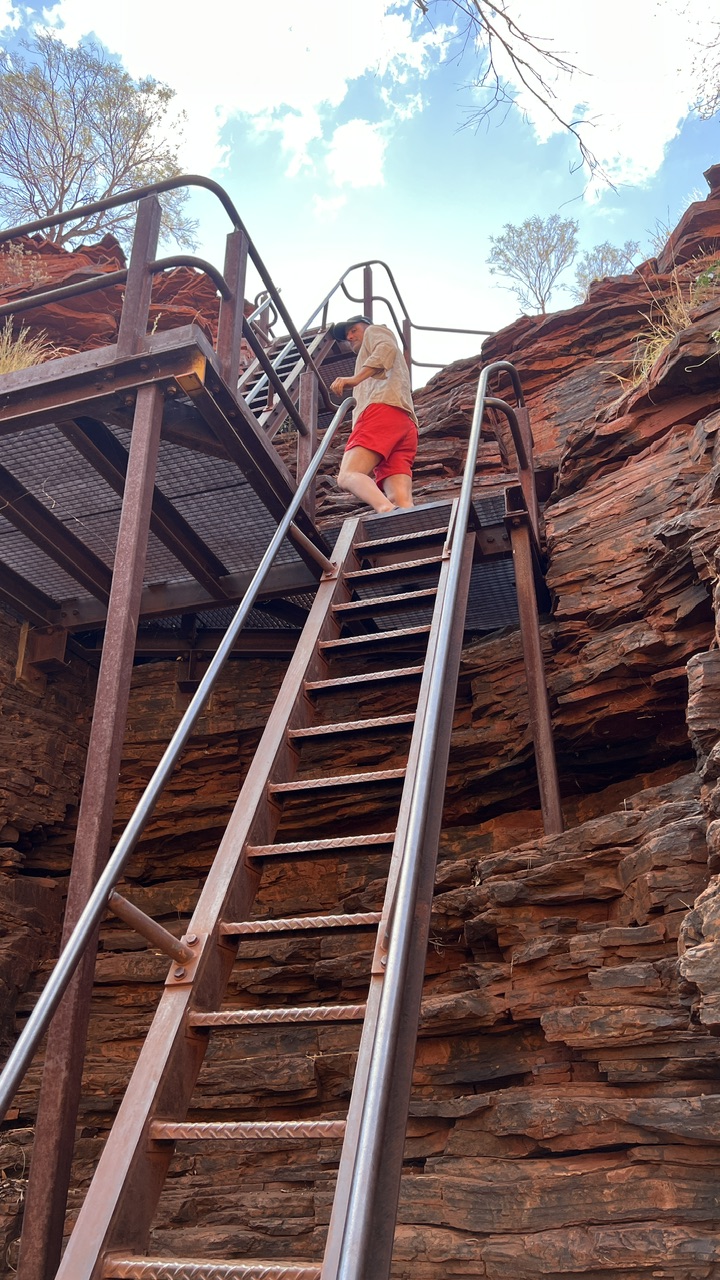
Unseren Besuch des Karijini National Parks setzen wir wie geplant am nächsten Tag fort. Die Wanderung zum Kermits Pool in der Hancock Schlucht wird mit dem Schwierigkeitsgrad Level 5 (das Höchste in Australien) beschrieben. Was ist also das richtige Schuhwerk für einen solchen Track? – Ja genau richtig, Crocs sind die Fussbekleidung der Wahl. In Wassertauglichkeit und Gripp auf rutschigem Gestein bleiben sie einfach ungeschlagen. Nein – Scherz beiseite, es gäbe sicher Geeigneteres, aber da bei dieser Wanderung auch ein Gang durchs Wasser nötig werden kann, sind sie von dem was wir dabei haben die beste Wahl – um einiges besser als die häufig angetroffenen Flipflops an den australischen Füssen sind sie aber auf jeden Fall. Im Kermits Pool baden können wir nach der anstrengenden Kletterpartie leider nicht, da das Wasser darin seit längerem steht und nicht mehr allzu frisch riecht.
We continued our visit to Karijini National Park the next day, as planned. The walk to Kermit’s Pool in Hancock Gorge is rated Level 5 (the highest in Australia). So what’s the right footwear for a track like this? – Yes, that’s right, Crocs are the footwear of choice. When it comes to water resistance and grip on slippery rock, they’re simply unbeatable. No – joking aside, there are certainly more suitable options, but as this walk may also involve wading through water, they’re the best choice from what we’ve got with us – and they’re certainly a fair bit better than the flip-flops so often seen on Australian feet. Unfortunately, we can’t have a dip in Kermit’s Pool after the strenuous climb, as the water has been standing there for a while and doesn’t smell all that fresh anymore.
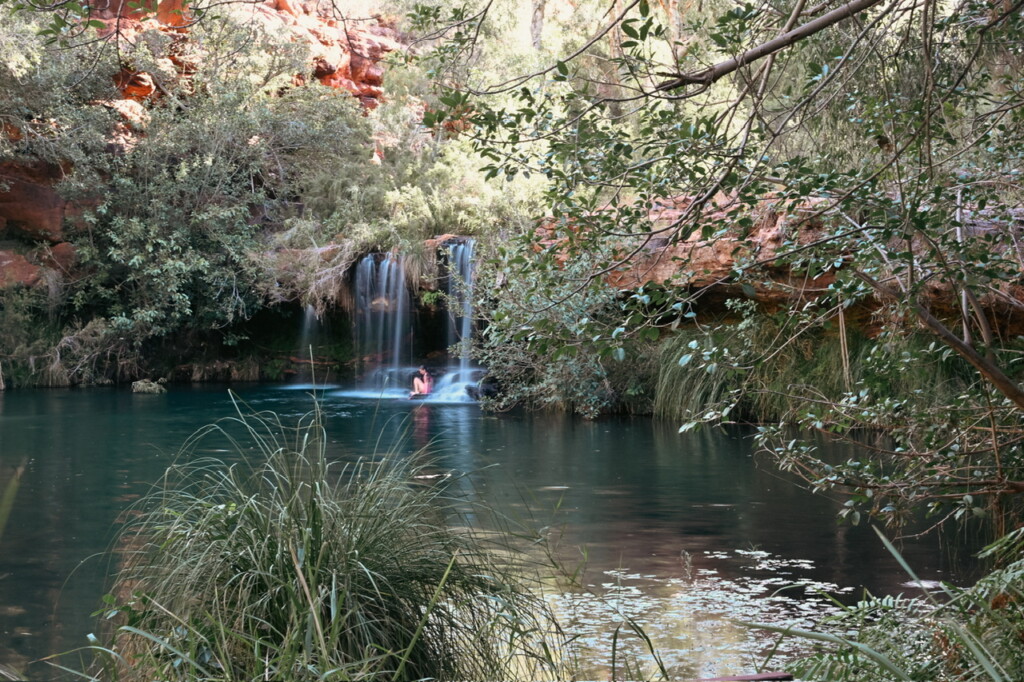
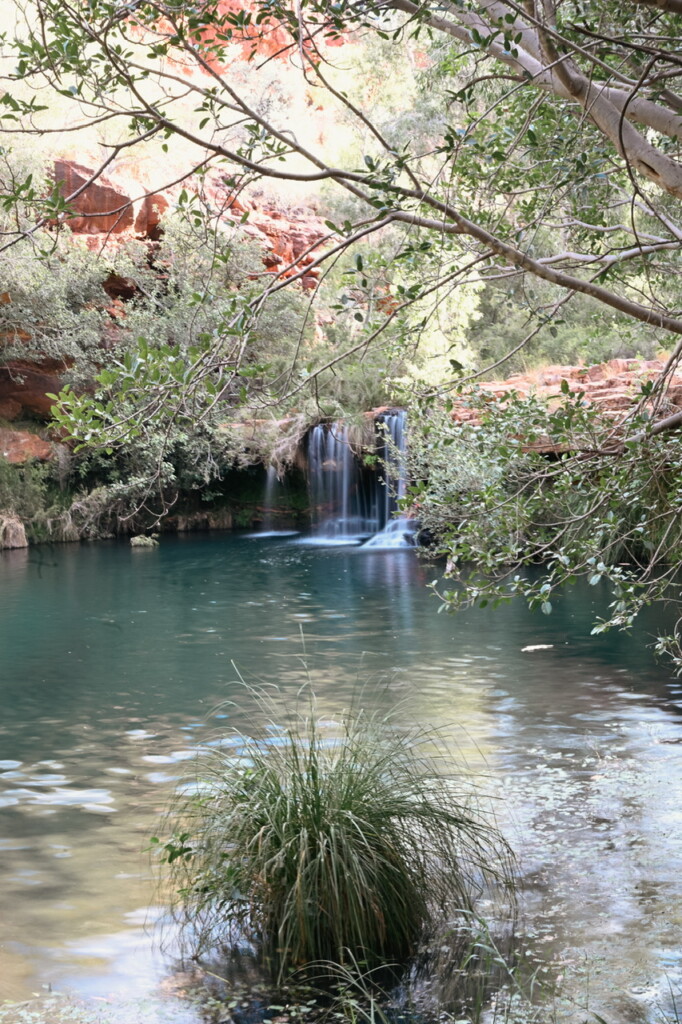
Die verdiente Abkühlung gibt es dann im Fern Pool der Dales Schlucht. Diese liegt praktischerweise auch gleich neben dem Camping Platz, wo wir unser Nachtlager aufschlagen und etwas früher an diesem Abend erschöpft in die Betten fallen – naja wohl eher ins Hubdach rauf klettern.
The well-deserved chance to cool off comes at the Fern Pool in the Dales Gorge. Conveniently, this is right next to the campsite where we set up camp for the night and, exhausted, fall into bed a little earlier than usual that evening – well, more like climbing up into the pop-up roof.